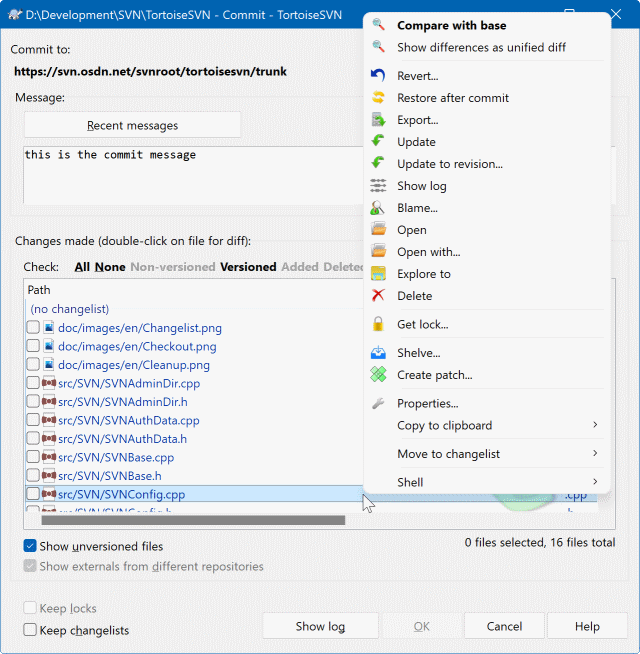
How to commit a file in svn?
Committing to SVN
- Right-click (macOS: Ctrl + click) the model item (the item of the uppermost level) in the Projects tree and choose SVN > Commit… from the popup menu.
- Alternatively, you can select any element of the model and choose File > SVN > Commit… from the main menu.
What is the svn command?
svn is the official command-line client of Subversion. Its functionality is offered via a collection of task-specific subcommands, most of which accept a number of options for fine-grained control of the program's behavior.
What is svn vs Git?
Both are enterprise-grade version control systems, with Git positioned as more of a source code management (SCM) tool while SVN acts more as a revision control system. Any Git installation can act as both the server and the client. Each user will have a local copy of the repository with its full version history.
How to migrate code from svn to Git?
Convert the source SVN repository to a local Git repository
- Retrieve a list of all Subversion authors.
- Clone the Subversion repository using git-svn.
- Convert version control-specific configurations.
- Push repository to a bare git repository.
- Migrate SVN tags to be Git tags.
- Create all the SVN branches as proper Git branches.
If you begin a commit and Subversion launches your editor to compose the commit message, you can still abort without committing your changes. If you want to …
The commit process is initiated via the SVN > Commit menu option. This command commits the changes in your local working copy to the repository.
You will need SVN (the command) and a Username and Password. Again, I assume you have all of these things ready. First thing you need to do is …